Inflation at 6.09%: RBI’s 6% Limit Breached, Rate Hike Likely
India’s Retail Inflation Surges to 6.09%, Breaches RBI’s Upper Tolerance Limit
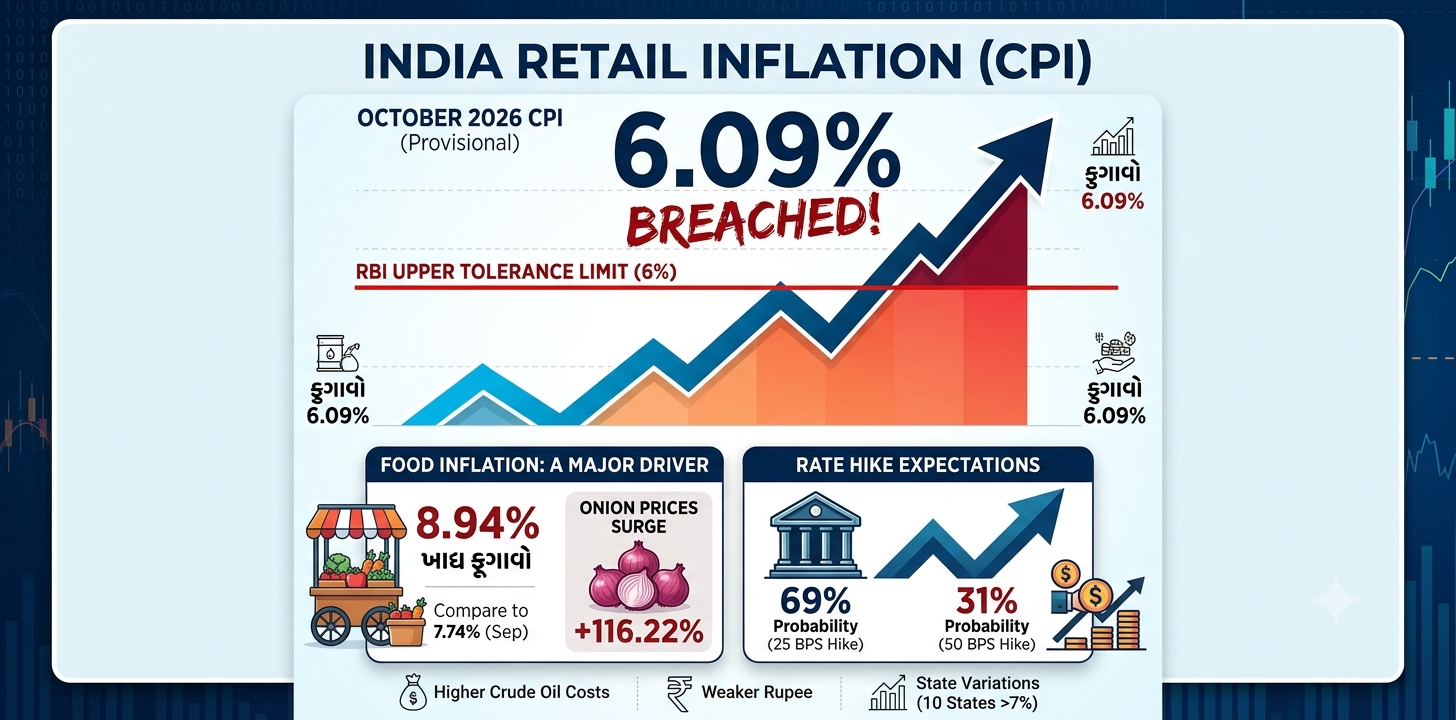
India’s retail inflation, measured by the Consumer Price Index (CPI), rose to
6.09% in October 2026, up from 5.54% in September, according to
provisional data released by the Ministry of Statistics and Programme Implementation
(MoSPI). This is the highest inflation reading in approximately two years and marks
the first time under the new CPI series that inflation has crossed the Reserve Bank
of India’s (RBI) upper tolerance limit of 6%.
Food Inflation a Major Driver
The primary driver of the spike was a sharp rise in food prices. Food inflation
accelerated to 8.94% in October, compared with 7.74% in September.
The Consumer Food Price Index (CFPI) showed broad-based increases, with rural food
inflation at 9.09% and urban food inflation at 8.68%.
| Item | Year-on-Year Increase |
|---|---|
| Onion | 116.22% |
| Garlic | 60.74% |
| Ginger | 48.32% |
Economists noted that an uneven and deficient monsoon affected the supply of key
staples, contributing to the price pressures.
RBI Target Breached; Rate Hike Expectations Rise
The October reading has pushed inflation above the RBI’s 6% upper tolerance limit.
The RBI has a medium-term target of 4% with a tolerance band of 2–6%. Retail
inflation has remained above the 4% target for four consecutive months.
Market participants are now pricing in a
69% chance of a 25 basis points rate hike at the next RBI meeting,
with a 31% probability of a larger 50 bps move.
State-Level Variations
Inflation was not uniform across the country. Ten states recorded inflation
above 7%, with Tamil Nadu and Telangana at 7.3%, Andhra Pradesh at 7.25%,
and Karnataka at 7.1%. Rural inflation (6.63%) was higher than urban inflation
(5.41%).
Other Contributing Factors
Higher crude oil prices, partly linked to geopolitical tensions, increased India’s
import bill and raised transportation, energy, and agricultural production costs.
A weaker rupee made imports more expensive, adding to domestic inflationary
pressures.
Outlook
With inflation breaching the RBI’s tolerance ceiling, pressure is mounting on the
central bank to tighten monetary policy. Economists expect price pressures to
persist in the coming months, although some moderation is anticipated in the
January–March quarter if food prices ease.
ભારતમાં છૂટક ફુગાવો 6.09% પર પહોંચ્યો, RBIની ઉપરની મર્યાદા ભંગ
ભારતમાં ગ્રાહક ભાવ સૂચકાંક (CPI) પર આધારિત છૂટક ફુગાવો
ઓક્ટોબર 2026માં 6.09% થયો છે, જે સપ્ટેમ્બરમાં 5.54% હતો.
આ લગભગ બે વર્ષનો સૌથી ઊંચો દર છે અને નવી CPI શ્રેણી હેઠળ પ્રથમ વખત
ફુગાવો RBIની 6%ની ઉપરની સહનશીલતા મર્યાદાને વટાવી ગયો છે.
ખાદ્ય ફુગાવો મુખ્ય કારણ
ફુગાવામાં વધારાનું મુખ્ય કારણ ખાદ્ય ચીજોના ભાવમાં થયેલો વધારો છે.
ઓક્ટોબરમાં ખાદ્ય ફુગાવો 8.94% થયો, જે સપ્ટેમ્બરમાં 7.74% હતો.
ગ્રામ્ય ખાદ્ય ફુગાવો 9.09% અને શહેરી ખાદ્ય ફુગાવો 8.68% રહ્યો.
| ચીજ | વાર્ષિક ભાવ વધારો |
|---|---|
| ડુંગળી | 116.22% |
| લસણ | 60.74% |
| આદું | 48.32% |
અસમાન અને ઓછા ચોમાસાને કારણે મુખ્ય ખાદ્ય ચીજોના પુરવઠા પર અસર પડી છે,
જેના કારણે ભાવ દબાણ વધ્યું છે.
RBI લક્ષ્ય ભંગ, વ્યાજદર વધારાની શક્યતા
ઓક્ટોબરના આંકડાએ ફુગાવાને RBIની 6%ની ઉપરની મર્યાદાને વટાવી દીધો છે.
RBIનું મધ્યમ ગાળાનું લક્ષ્ય 4% છે, જે 2–6%ની બેન્ડમાં છે. છૂટક ફુગાવો
સતત ચાર મહિનાથી 4%ના લક્ષ્યથી ઉપર છે.
બજાર હવે આગામી RBI બેઠકમાં
25 બેસિસ પોઈન્ટ વ્યાજદર વધારાની 69% શક્યતા
વ્યક્ત કરી રહ્યું છે, જ્યારે 50 બેસિસ પોઈન્ટ વધારાની 31% શક્યતા છે.
રાજ્યવાર ફરક
દેશભરમાં ફુગાવો એકસરખો નથી. 10 રાજ્યોમાં ફુગાવો 7%થી વધુ હતો,
જેમાં તમિલનાડુ અને તેલંગાણામાં 7.3%, આંધ્રપ્રદેશમાં 7.25% અને કર્ણાટકમાં
7.1% હતો. ગ્રામ્ય વિસ્તારોમાં ફુગાવો (6.63%) શહેરી વિસ્તારો (5.41%) કરતાં વધુ હતો.
અન્ય પરિબળો
ઊંચા ક્રૂડ ઓઇલ ભાવોને કારણે પરિવહન, ઊર્જા અને કૃષિ ઉત્પાદન ખર્ચ વધ્યો છે.
નબળા રૂપિયાએ આયાતને વધુ ખર્ચાળ બનાવી છે, જેણે ઘરેલું ફુગાવાના દબાણમાં વધારો કર્યો છે.
આગળનો માર્ગ
ફુગાવો RBIની મર્યાદા વટાવી ગયો હોવાથી નાણાકીય નીતિમાં કડકાઈ લાવવા પર દબાણ
વધ્યું છે. અર્થશાસ્ત્રીઓ માને છે કે આગામી મહિનાઓમાં ભાવ દબાણ ચાલુ રહેશે,
જોકે જાન્યુઆરી–માર્ચ ક્વાર્ટરમાં થોડી નરમાઈ આવી શકે છે.